
Raleigh Triangle Market Update: More Homes, Lower Rates, and What It Means for You

Raleigh Triangle Market Update: More Homes, Lower Rates, and What It Means for You
October brought more homes to choose from across the Triangle, mortgage rates fell for a fourth straight week, and new research shows Raleigh's housing construction surge is connected to lower inflation-adjusted rents. The headline is simple: buyers have more options, but affordability is still a personal calculation, not a headline number.
Here is what changed this week, what the numbers actually say, and what it means whether you are buying, selling, or staying put.
Are buyers getting more choices in the Triangle right now?
Yes. October Triangle inventory rose 10.2% compared with last year, while closed sales fell 10.2%, which means buyers have more homes to compare and more room to negotiate. At the same time, nearly half of the homes that sold had an asking-price cut first, so pricing is doing real work in this market.
The October 2026 Triangle report from EasyDigz, built on Doorify MLS data across its 16-county service area, shows a market that has clearly shifted toward buyers having more options:
| Triangle indicator, October 2026 | Figure | Change vs. last year |
|---|---|---|
| Closed sales | 2,837 | Down 10.2% |
| Inventory | Up across the region | Up 10.2% |
| Months of supply | 4.6 months | Up from 3.7 months |
| Homes sold after an asking-price reduction | 47.3% | Up from 43.7% a year ago |
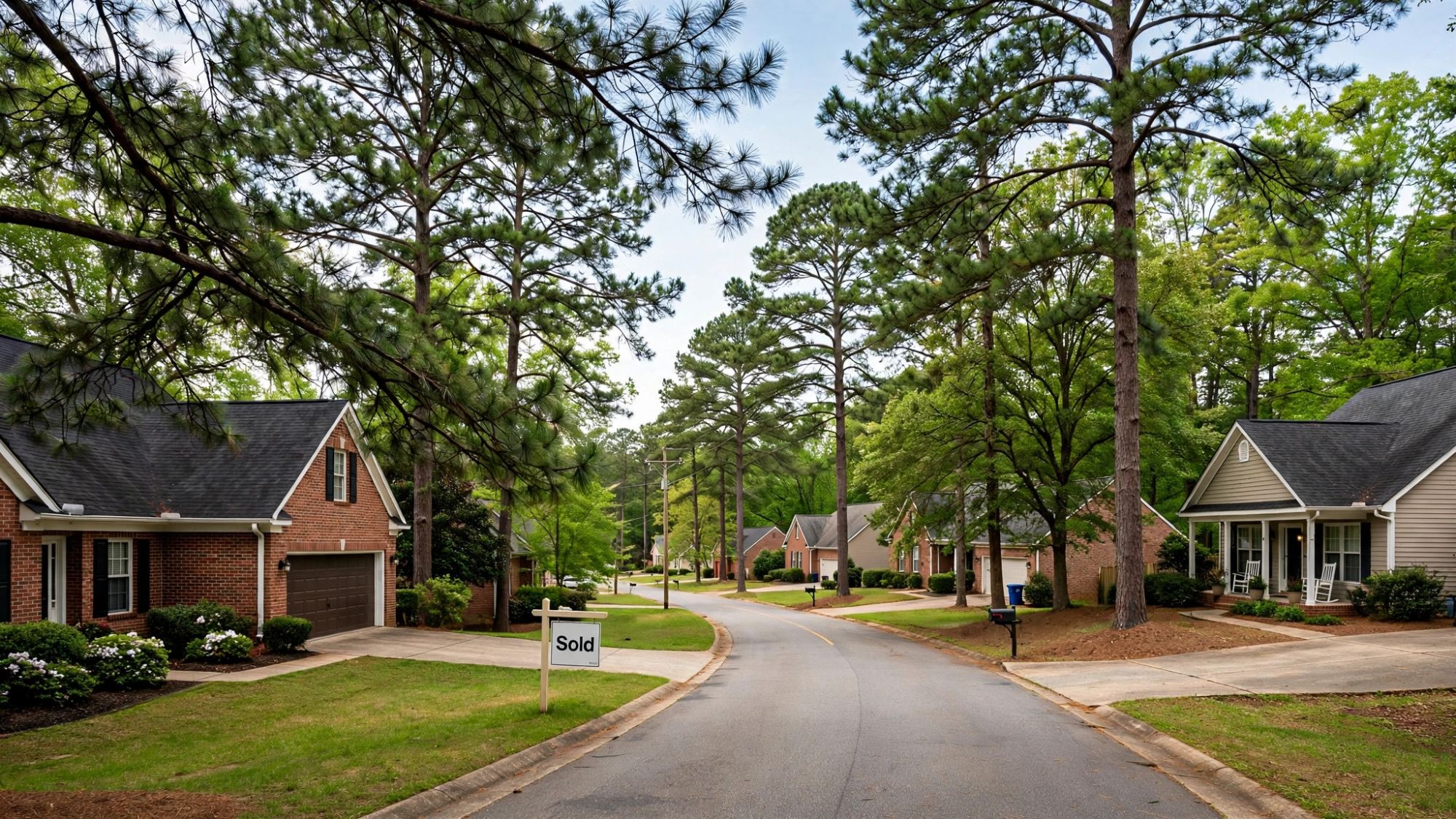
Generated illustration, not a photograph.
Raleigh itself tells a slightly different story, which is why city-level numbers matter. The October 2026 Doorify MLS Market Review for Raleigh, reported by Living in Raleigh Triangle, shows 351 closed sales of single-family and townhouse homes, a median sale price of $540,000 (up 2.9% year over year), a median of 27 days on market, and 457 new listings (down 16.9% from October 2025). Sellers received 98.3% of list price.
That contrast is the point: regional inventory is up and regional sales are down, yet Raleigh's median price still rose. Regional trends should not be applied automatically to any one city, neighborhood, or property.
What is happening with mortgage rates?
Mortgage rates fell for a fourth consecutive week. Freddie Mac's November 12 survey put the national 30-year fixed average at 7.11%, down from 7.18% the week before, and the 15-year fixed at 6.45%, down from 6.57%. Rates are still well above the 6.24% 30-year average from a year ago, so the improvement is real but modest.
| Mortgage type | November 5, 2026 | November 12, 2026 | One year ago |
|---|---|---|---|
| 30-year fixed | 7.18% | 7.11% | 6.24% |
| 15-year fixed | 6.57% | 6.45% | Not cited this week |

Generated illustration, not a photograph.
Source: Freddie Mac Primary Mortgage Market Survey, published November 12, 2026. Freddie Mac's chief economist, Sam Khater, called it the lowest level in seven weeks.
Two things to keep in mind. First, these are national averages, not Raleigh quotes. Your actual rate depends on your credit, loan type, down payment, points, and lender. Second, the weekly survey averages loan applications from the prior Thursday through Wednesday, so it reflects applications through November 11. Daily rate trackers moved higher after the November 10 Consumer Price Index report, which means the weekly average does not capture the latest daily movement. A lower rate may improve affordability modestly, but a small weekly decline does not make an otherwise unaffordable home affordable.
What does the new Pew research say about Raleigh housing?
New research from The Pew Charitable Trusts, published November 16, found that Raleigh's housing production jumped sharply after the city reformed its land-use rules in 2021 and 2022, and that inflation-adjusted rents fell 15% from 2022 to 2025. The research connects more housing supply, especially townhouses and apartments, with slower rent growth in a fast-growing city.
The numbers from the Pew article:
- Raleigh issued permits for an average of 3,301 new housing units per year from 2017 to 2020. From 2021 to 2024, that average jumped 74% to 5,731 units per year.
- More than 2,000 townhouses have been built since 2021, along with more than 200 duplex units and over 200 accessory dwelling units and tiny homes.
- Inflation-adjusted rents fell 15%, on average, from 2022 to 2025, even as Raleigh added about 31,000 residents in that period.
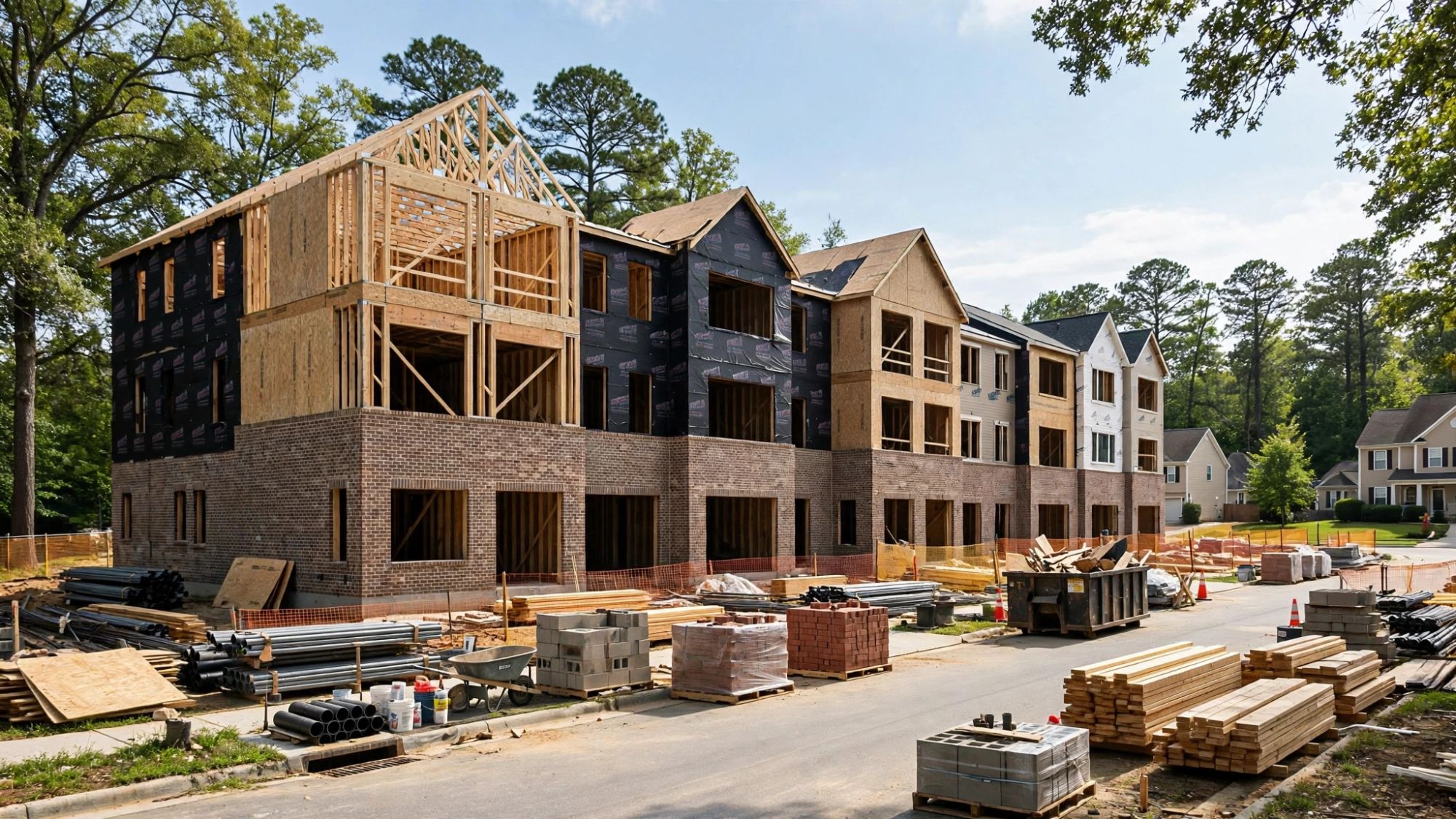
Generated illustration, not a photograph.
A few careful notes. The 15% rent figure is inflation-adjusted, not a 15% drop in the rent people actually pay each month. It covers 2022 through 2025, so it is not a measure of asking rents right now. And the research does not prove zoning reform was the only cause of the changes in construction or rents. What it does show is that building more homes, in more shapes and sizes, is part of how a growing city keeps housing costs in check.
What should buyers, sellers, and homeowners do with this information?
Use the data as a starting point, not a decision. Buyers have more to choose from and should compare recent sales, condition, and total monthly cost. Sellers face more competition and need realistic pricing and strong presentation. Homeowners should remember that regional medians say nothing about any one home's value.
- For buyers: More inventory means more chances to compare and negotiate. Ask your lender for updated loan estimates, and compare the rate, annual percentage rate, mortgage insurance, taxes, insurance, closing costs, and total monthly payment, not just the rate headline.
- For sellers: With 47.3% of Triangle homes selling after a price cut, your competition and your asking price matter more than ever. An overpriced listing is likely to sit and then need an adjustment before it draws an acceptable offer.
- For homeowners: A change in the regional median price does not tell you whether your own home gained or lost value. If you are thinking about refinancing, run the numbers on whether the payment savings justify the cost of a new loan. If you are curious about what new housing types mean for your property, check current zoning and permit rules before assuming anything.
The three things to remember this week
- More homes, more choices, but conditions vary. Triangle inventory is up and sales are down, yet Raleigh's median price still rose. Your neighborhood may look different from the regional picture.
- Rates improved modestly, but affordability is personal. A fourth straight weekly decline is welcome, but the real question is your full monthly cost, not the national average.
- Supply is a long-term part of Raleigh's affordability story. New research shows that building more homes, in more forms, can help hold housing costs down over time.
Frequently asked questions
Is it a buyer's market in the Triangle right now?
Conditions have shifted toward buyers. October inventory rose 10.2% year over year, closed sales fell 10.2%, and months of supply reached 4.6, up from 3.7 a year ago. But Raleigh's median sale price still rose 2.9%, so conditions vary by city and neighborhood.
What is the current mortgage rate in Raleigh?
There is no single Raleigh rate. Freddie Mac's November 12 national survey put the 30-year fixed average at 7.11% and the 15-year at 6.45%. Your actual rate depends on your credit, loan type, down payment, points, and lender, so get an updated loan estimate before making plans.
Did Raleigh rents really fall 15%?
Inflation-adjusted rents fell 15%, on average, from 2022 to 2025, according to Pew research published November 16, 2026. That is not a 15% drop in the rent people pay each month, and it is not a measure of current asking rents. It reflects rent growth slowing enough that rents fell once inflation is accounted for.
Should sellers cut their asking price?
Not automatically. In October, 47.3% of Triangle homes sold after an asking-price reduction, which shows pricing matters. But the right price depends on recent comparable sales, your home's condition, and the competition in your neighborhood. Price realistically from the start and you are less likely to need a cut later.
How many homes are for sale in Raleigh?
Raleigh had 457 new listings in October 2026, down 16.9% from October 2025, and active inventory has expanded to roughly 1,758 listings, according to the October Doorify MLS Market Review for Raleigh as reported by Living in Raleigh Triangle. Months of supply sits at about 3.3, which is generally considered balanced-market territory.
Wilogé Cole Jr.
The EASE Group | Brokered by eXp Realty LLC
Categories
Recent Posts