
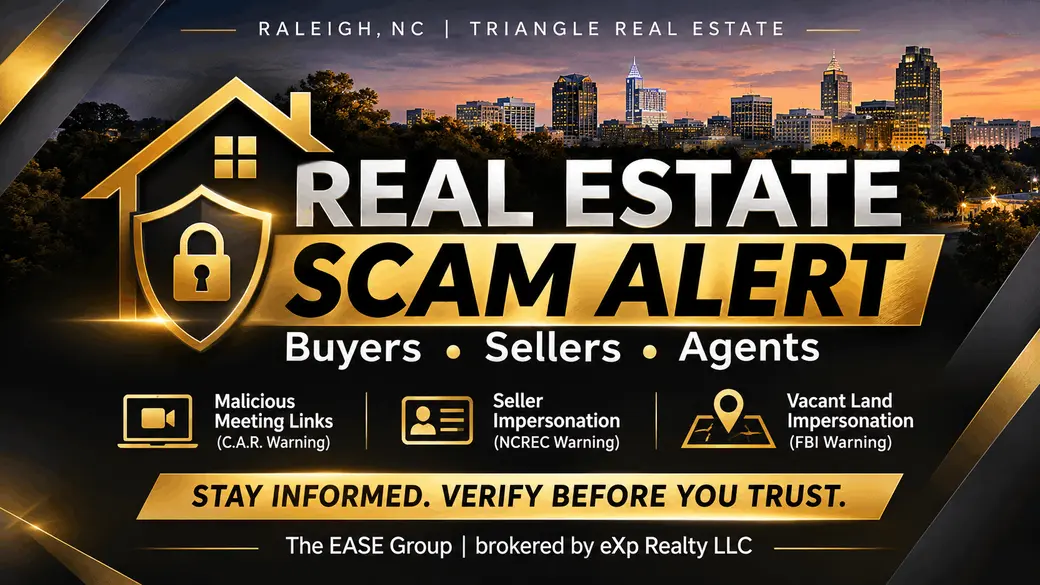
Real Estate Scams Are Getting Smarter: What Every Buyer, Seller, and Agent Needs to Know
Triangle real estate • Consumer safety • November 2026
Real Estate Scams Are Getting Smarter: What Buyers, Sellers & Agents Need to Know
Fake buyers, forged sellers, AI impersonation, and closing scams: protect yourself with a few smart verification steps.
If someone contacted you today claiming to be a serious buyer, a property owner ready to sell, or even your closing attorney, would you know how to verify their identity?
Real estate scams have become more sophisticated. I've personally encountered suspicious buyer inquiries, including unusual video-meeting demands. Not every virtual buyer is suspicious; the warning is pressure to bypass reasonable security steps.
1. Fake Buyer Inquiries and Malicious Meeting Links
A lead mentions a real listing and asks for a quick video meeting. That can be completely legitimate. But the California Association of REALTORS® warned in May 2026 that fraudulent buyer inquiries have been used to deliver malicious meeting links and malware.
Watch for pressure to click an unfamiliar link, install special software, disable protections, or switch operating systems. I prefer to send meeting invitations from a trusted account and independently confirm an unfamiliar caller.
- Schedule meetings through a trusted platform.
- Do not install unfamiliar meeting software.
- Verify new contacts before sharing documents.
2. Seller Impersonation and Vacant-Land Fraud
The FBI issued a June 2026 alert describing criminals who use forged identification and public property records to pose as vacant-land owners. They may try to sell property without the actual owner's knowledge.
The North Carolina Real Estate Commission's October 2026 bulletin also warns buyer agents not to treat an MLS listing as proof that the seller is genuine. Vacant land, inherited property, absentee owners, unusually fast cash closings and requests for direct due-diligence payments warrant extra scrutiny. No single red flag proves wrongdoing.
- Verify ownership and identity using independent methods.
- Engage a reputable North Carolina closing attorney early.
- Owners can ask their Register of Deeds about available recording alerts.
3. Closing and Wire Fraud
A message claiming to be from a closing professional can look authentic while substituting a criminal's bank account. The danger is especially acute when a payment request arrives unexpectedly or changes at the last minute.
- Call your closing attorney using a number independently obtained before wiring money.
- Treat changed payment instructions as a stop-and-verify event.
- If money was sent, call the bank immediately and report the incident to IC3.
4. AI Impersonation and Deepfakes
Scammers can manipulate images, voices, and videos, making familiar-looking messages less reliable. The 2026 ALTA study found title professionals increasingly reported deepfake imagery or voice among fraud tactics.
- Use a separately verified phone number to confirm requests.
- Never treat a video or familiar voice alone as identity proof.
- Use multifactor authentication for email and CRM accounts.
5. What Sellers and Property Owners Can Do
Even a property that is not listed for sale may be targeted. Vacant land, rental property, inherited homes and property owned free and clear all deserve attention.
- Review ownership records periodically.
- Explore county recording-notification services where available.
- Question unsolicited sale activity and contact an attorney when ownership is unclear.
6. What Agents Can Do
Agents are in a position to notice odd patterns early, help clients slow down, and involve the appropriate professionals. An unusual request is not necessarily a scam, but repeated refusal to verify identity should never be ignored.
- Use layered identity checks, not just an ID photograph.
- Create meeting invitations yourself.
- Discuss wire-fraud precautions early with clients.
- Escalate suspicious circumstances to your broker and closing attorney.
7. What to Do If Something Feels Wrong
Stop communicating through the suspicious channel and preserve relevant messages. If funds are involved, call the financial institution immediately to request a recall or recovery review. File an internet-fraud report with the FBI at ic3.gov. In property transactions, alert your closing attorney and appropriate brokerage personnel.
8. Trust Matters. Verification Matters More.
Buying or selling a home should be exciting—not a guessing game about who is on the other end of a message. Ask questions, verify unexpected requests, and do not let anyone rush you into a decision involving your money or identity.
My goal is to help Triangle buyers, sellers and fellow agents recognize red flags without treating every online inquiry as a threat. Awareness, communication and careful verification make a difference.
Categories
Recent Posts