
Radon! The Silent Guest: Understanding and Managing Radon Gas in Your Home
The Silent Guest: Understanding and Managing Radon Gas in Your Home
It's colorless, odorless, and the second leading cause of lung cancer. Here is a straightforward guide to understanding radon and ensuring your indoor air is safe.
When we think about home safety, our minds usually go to smoke detectors, carbon monoxide alarms, or locking the doors at night. We rarely think about the ground beneath our foundation. Yet, that ground can be the source of a significant, invisible health risk: radon gas.
Radon is a serious public health issue, but because it isn't tangible—you can't see it or smell it—it often goes ignored. January is typically recognized as National Radon Action Month, but this is a topic that requires year-round attention.
Here is an educational overview of what radon is, why it matters to your health, and the simple steps you can take to manage it.
What Is Radon?
Radon is a naturally occurring radioactive gas released from the normal decay of uranium, thorium, and radium found in rocks and soil. It is invisible, odorless, and tasteless.
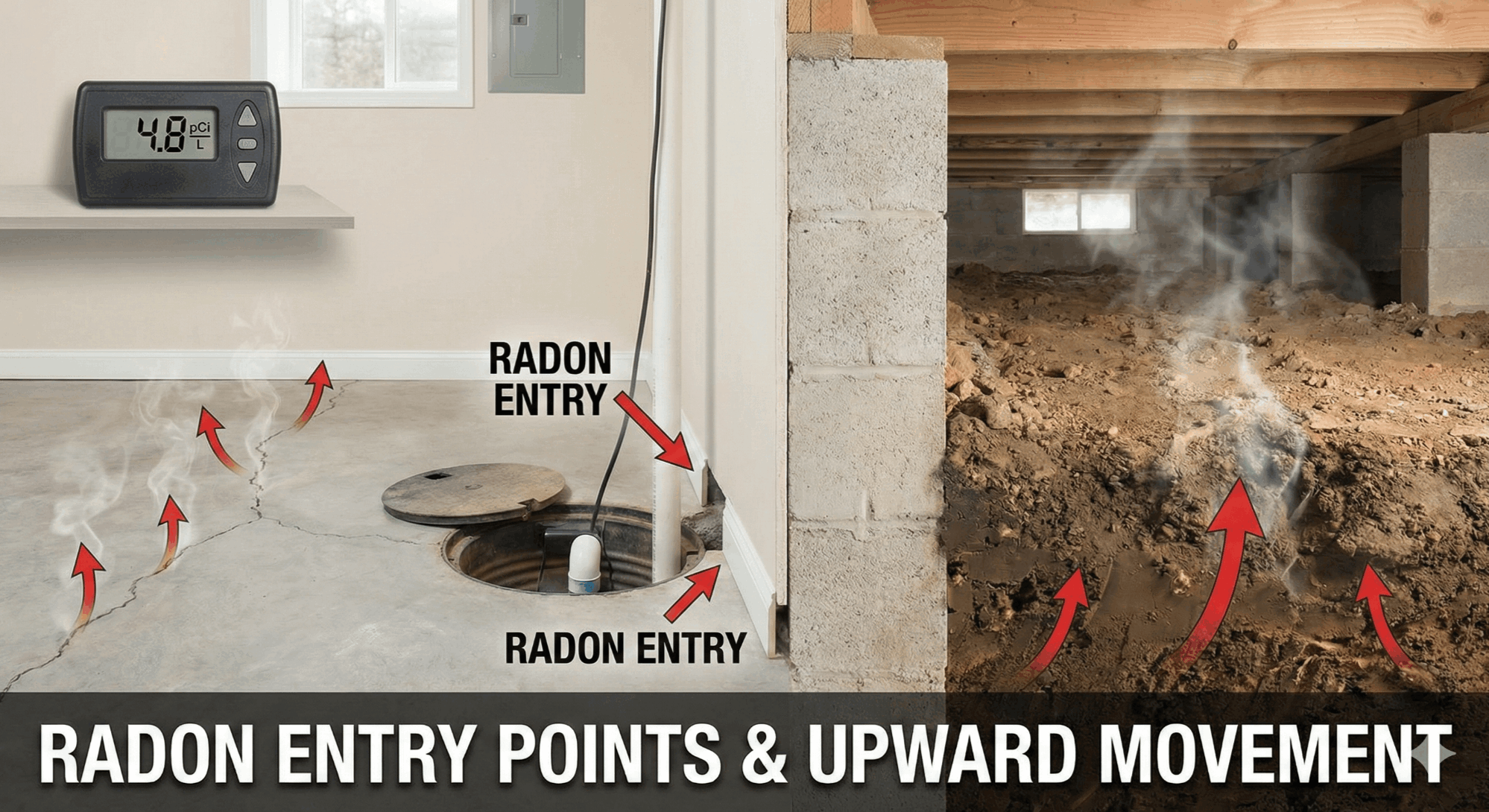
While radon is present outdoors in harmless concentrations, problems arise when this gas seeps into buildings and gets trapped inside. It enters homes through cracks in floors, construction joints, gaps around service pipes, and sump pumps.
Because modern homes are built to be increasingly energy-efficient and airtight, radon can accumulate to dangerous levels once inside.

The Health Risk: Why You Should Care
Radon is not merely a nuisance; it is a carcinogen.
According to the U.S. Environmental Protection Agency (EPA) and the Surgeon General's office, radon is the second leading cause of lung cancer in the United States, responsible for roughly 21,000 lung cancer deaths annually.
Crucially, it is the number one cause of lung cancer among non-smokers. If you do smoke and live in a home with high radon levels, your risk of developing lung cancer increases exponentially.
When you breathe in radon gas, radioactive particles can get trapped in your lungs. Over time, these particles increase the risk of lung cancer. It is a long-term exposure risk, meaning the danger comes from living with high levels over many years.
The Myth of "Safe Zones"
A common misconception is that radon only affects certain parts of the country. This is untrue. High radon levels have been found in every state.
Furthermore, you cannot predict your home's radon level based on your neighbor's results. Two identical houses right next to each other can have vastly different radon readings due to subtle differences in the soil beneath them and variations in their foundations.
The Only Solution: Testing
Because human senses cannot detect radon, the only way to know if your home has elevated levels is to test for it.
The EPA recommends that all homes—regardless of age, foundation type, or geographic location—be tested below the third floor.
Types of Tests:
Short-term tests
These remain in your home for two to 90 days. They are excellent for an initial screening to see if a problem exists.
Long-term tests
These remain for more than 90 days because radon levels fluctuate based on seasons and weather pressure changes. A long-term test gives a better year-round average of your exposure.
Testing is inexpensive and simple. You can purchase kits at hardware stores or order them through certified radon testing companies.
What if Levels Are High?
The EPA has set an "action level" of 4 picocuries per liter (pCi/L). If your home tests at or above this level, you should take steps to fix it. Even levels between 2 and 4 pCi/L pose some risk, and you may consider lowering them.
The good news is that high radon levels are fixable.
Take Action for Your Health
Radon is a preventable health risk. By understanding what it is and taking the simple step of testing your home, you are protecting long-term respiratory health.
For more in-depth information, visit the EPA's resources on radon at www.epa.gov/radon or the Centers for Disease Control at www.cdc.gov/radon.
Categories
Recent Posts